
America’s Backup Hospital: The VA’s Fourth Mission, and Why Staffing It Matters
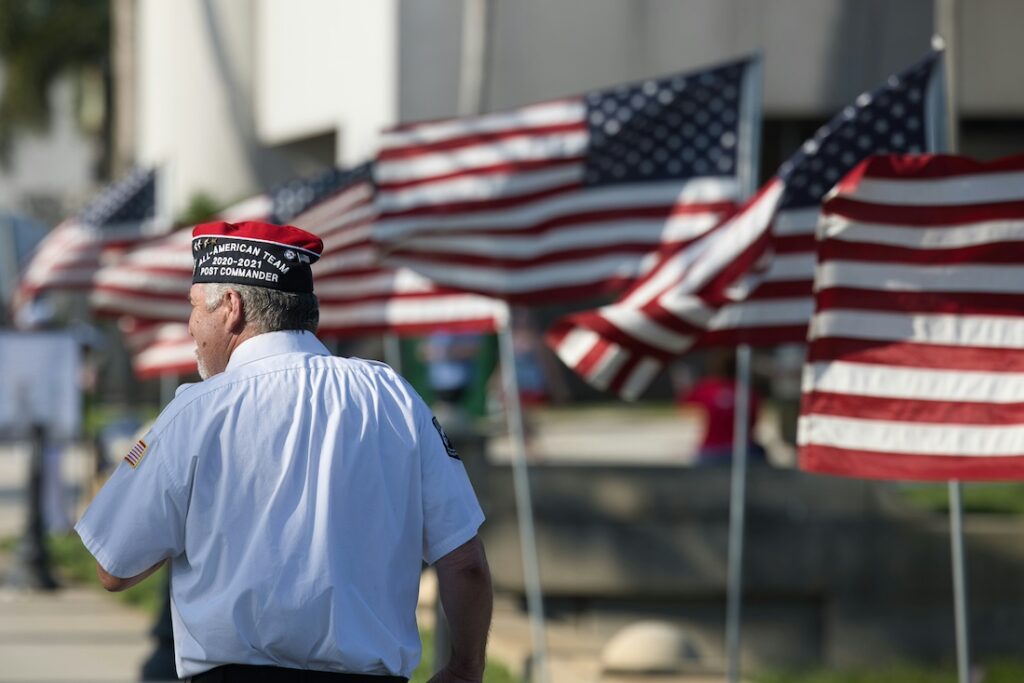
Most Americans know the Department of Veterans Affairs as the health system that cares for veterans. Fewer know that the VA has another job, one written into federal law and rarely discussed outside emergency management circles. When the nation faces war, a pandemic, or a major disaster, the VA is expected to step in and help carry the load.
It’s called the VA’s Fourth Mission. And as military planners prepare for the possibility of large-scale conflict, it may turn out to be one of the most important and least appreciated roles in American healthcare. It also depends on something the VA is currently struggling to secure: enough clinicians.
The Four Missions of the VA
The VA’s health system carries four core responsibilities. The first three are well known: providing healthcare to veterans, conducting medical research, and training the next generation of clinicians. Most U.S. physicians have trained at a VA facility at some point in their education.
The fourth is different. In the VA’s own words, the Fourth Mission is “to improve the Nation’s preparedness for response to war, terrorism, national emergencies, and natural disasters.” That means ensuring continued care for veterans during a crisis while also supporting national, state, and local emergency response.
The most striking line in the VA’s description of this role is this one: “VA is the primary medical back-up system to the Department of Defense.”
That role dates back to a 1982 law, the VA and Department of Defense Health Resources Sharing and Emergency Operations Act. The logic is simple. The military runs its own hospitals and clinics for active-duty service members. But in a major war, military medical capacity could be overwhelmed. When that happens, the VA, with 170 medical centers and more than 1,190 outpatient sites nationwide, is designated to take the overflow.
Part of the National Disaster Medical System
The Fourth Mission doesn’t operate in isolation. The VA is one of four federal partners in the National Disaster Medical System (NDMS), alongside the Department of Health and Human Services, the Department of Homeland Security, and the Department of Defense. NDMS is the federal framework for moving patients and medical teams where they’re needed during a national emergency.
The VA’s role in NDMS is substantial. According to the VA’s Office of Emergency Management, it operates more than 50 Federal Coordinating Centers, the hubs that coordinate with local hospitals to receive and distribute patients in a crisis. It also runs its own deployment program, the Disaster Emergency Medical Personnel System (DEMPS), which sends VA clinical and non-clinical staff to disaster zones when called.
In other words, when a hurricane flattens a region or a public health emergency overwhelms local hospitals, the VA is one of the institutions expected to answer.
The Fourth Mission in Action
For most of its history, the Fourth Mission operated quietly. Then came COVID-19.
According to the Government Accountability Office, between March 2020 and February 2021 the VA carried out 117 Fourth Mission assignments across 38 states, one territory, and four tribal communities. It deployed 2,934 staff members to support civilian hospitals and nursing homes, treated civilian patients in VA facilities, and helped with testing and vaccination efforts. The total cost was estimated at about $270 million. GAO described the response as unprecedented in magnitude, duration, and scope.
VA nurses went into overwhelmed nursing homes. VA physicians treated civilian patients. VA facilities opened beds to communities that had run out of their own. It was the Fourth Mission working exactly as designed, and it showed what the VA can do when the country needs it.
It also showed something else: every clinician the VA sends out to help the nation is a clinician who isn’t at their home facility caring for veterans. The Fourth Mission only works if the VA has enough people to cover both.
Preparing for a Very Different Kind of Emergency
Pandemics and hurricanes are one kind of test. Military planners are increasingly focused on another: a large-scale conflict with a capable adversary.
For two decades, American military medicine was shaped by the wars in Iraq and Afghanistan, where U.S. forces had air superiority and could evacuate wounded service members quickly. A conflict with a near-peer power could look very different.
In March 2025, Col. (Dr.) Jeremy Cannon, a retired Air Force Reserve trauma surgeon and professor of surgery at the University of Pennsylvania, testified before the Senate Armed Services Committee on military medical readiness. In a near-peer conflict, he told senators, “we anticipate casualty numbers as high as 1,000 per day for at least 100 days,” a volume he described as “far beyond what our current system can handle.” He also noted that only about 10% of military general surgeons get the case volume and patient acuity they need to stay combat-ready.
Congress has taken notice. It directed the creation of an NDMS Pilot Program, led by the Uniformed Services University, to strengthen the system’s ability to care for U.S. casualties returning from an overseas large-scale combat operation. The pilot is working across eight locations: Washington, D.C.; San Antonio; Denver; Omaha; Sacramento; Honolulu; Shreveport; and Puget Sound.
None of this means a war is coming. It means the people responsible for national readiness are planning for the possibility, and when they do, the VA is part of the plan.
The Problem: The Backup Is Short-Staffed
A backup system only works if it has spare capacity. Right now, the VA doesn’t have much.
In September 2026, the VA’s Office of Inspector General reported that VA facilities identified 4,712 severe occupational staffing shortages for fiscal year 2026, the highest total in seven years. According to the OIG report, 97% of VA facilities reported severe shortages of physicians, and 86% reported severe shortages in nursing occupations. Psychology, psychiatry, and multiple radiology specialties were among the most commonly reported gaps. (The OIG notes that these figures reflect facility leaders’ assessments rather than independently verified vacancy counts, and the VA has said its overall vacancy rates compare favorably with other health systems.)
Meanwhile, the military’s own medical capacity has been under pressure. In 2019, the Pentagon proposed cutting roughly 18,000 military medical positions, known as billets. After pushback from Congress, the plan was scaled back, and a federal watchdog later found the analysis behind the cuts was flawed. But the episode reflects a familiar pattern: in peacetime, military medicine tends to shrink.
Put those pieces together and the picture is sobering. The system the nation would lean on in a major war is the same system where nearly every facility says it can’t fully staff physician roles. The backup, in other words, needs backup.
Why a Fully Staffed VA Is a National Readiness Issue
It’s easy to think of VA staffing as a veterans’ issue alone. It is that, first and foremost. Veterans waiting for a scan, a procedure, or a mental health appointment deserve better than a staffing gap.
But the Fourth Mission makes VA staffing something larger. Every open radiology position, every unfilled nursing shift, and every clinic running below capacity reduces the VA’s ability to do its day job and its emergency job. A VA that is already stretched thin in peacetime has less to give when the nation calls.
That’s why the work of keeping VA facilities staffed matters beyond any single hospital. Permanent hiring is essential, but it takes time. Contract clinicians help fill critical gaps now, keeping clinics open and care moving while permanent recruiting continues. When VA staff deploy to support a disaster response, contract professionals can help ensure that veterans at home still get seen.
A Role for Clinicians Who Want Their Work to Matter
As a service-disabled veteran-owned business, Summit Operations Group recruits physicians, psychologists, nurses, and clinical support staff for contract roles at VA medical centers across the country. Our current openings include interventional and diagnostic radiology, pain psychology, nursing, and medical support roles, exactly the kinds of positions the OIG identified as hardest to fill.
Summit is a private staffing partner, not part of NDMS or any federal response team. But every clinician we help place strengthens the system that cares for veterans every day and stands ready to serve the nation when it matters most.
For clinicians, that’s a rare combination: meaningful work caring for the men and women who served, inside a health system with a mission that reaches well beyond its own walls. You don’t need to be a veteran to do this work. You just need the skills, the credentials, and the commitment to show up for the people who did.
Learn how VA contract work works → · See why VA hospitals can’t find enough specialists → · View current openings →
Contact Us Now
"*" indicates required fields